September 2026 | By Carrie Jobe
4 Takeaways for Health Plans:
- Regional health plans can turn their size into an advantage by moving quickly, staying close to members, and focusing their investments.
- Growth requires stronger operations, especially as plans expand into new markets, products, and populations.
- AI creates another opportunity to move faster, but health plans need to focus it on meaningful operational and member challenges.
- Community presence remains a differentiator that technology should strengthen rather than replace.
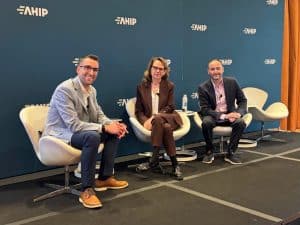
Healthcare is having a reset moment. That was the theme of this year’s ACHP Symposium, and after spending a few days talking with leaders from community-based health plans, I left feeling surprisingly energized about what comes next.
There is no shortage of pressure. Health plans are navigating tighter margins, regulatory change, rising costs, shifting markets, workforce questions, and new technology arriving at a pace that can be difficult to keep up with.
These organizations are making hard decisions. They are rethinking where they invest, where they grow, how they operate, and even what work they should stop doing. And because they are smaller and closer to their communities, they may have an opportunity to move differently than much larger organizations.
Lisa Erickson, President and CEO of Medica, captured that sentiment early in the discussion: “This is a time of opportunity.” And I completely agree.
Why Regional Health Plans Have an Opportunity to Move Faster
Being a regional health plan comes with obvious challenges. Resources are not unlimited, and the economics of healthcare are putting pressure on organizations of every size.
But scale has tradeoffs. Large organizations have tremendous resources. They can also have layers of systems, teams, approvals, and processes that make changing direction difficult.
Regional plans tend to operate closer to their members, providers, employees, and communities. Decisions can move through fewer layers. Leaders often have a clearer view into what is happening operationally and where something is creating friction.
Lisa made a similar point when the panel turned to AI. She described regional plans as having an opportunity to “leapfrog” because they are small and local, while noting that taking advantage of that opportunity still requires focus and clarity.
I don’t think that applies only to AI.
Whether a plan is entering a new market, launching a new product, changing an operating model, or introducing new technology, there is real value in being able to identify a problem and move.

Health Plan Growth Puts Operations to the Test
One of my favorite moments from the panel came from Coreen Dicus-Johnson, President and CEO of Network Health. After significant growth, she confronted reality with her team.
“What got us here today is not going to help us sustain this type of growth. We need to rethink how we’re doing things.”
Coreen Dicus-Johnson, President and CEO of Network Health.
That really stuck with me. Growth is exciting! We spend a lot of time in healthcare talking about entering markets, adding products, serving new populations, and increasing membership.
Then comes the operational reality. More members mean more enrollments to process, more payments to manage, more reconciliation, more communications, more service interactions, and more exceptions that need attention. Moving into another market can introduce different rules, partners, systems, and workflows.
The processes that work beautifully at one scale can become bottlenecks at another.
Transformation Also Means Knowing What to Stop
There was another theme from the panel that I appreciated because it rarely gets as much attention as the shiny new investments: what do we stop doing?
Transformation tends to generate additions. A new system, vendor, workflow, product. Another initiative everyone somehow needs to fit into an already full day.
The CEOs talked openly about making tradeoffs and becoming more disciplined about where their organizations put time and resources. For a regional plan, that discipline is especially important. Every investment needs a reason to exist.
That means asking whether a technology is solving a meaningful problem. Whether an existing process still serves the organization. Whether a vendor relationship is creating enough value. Whether something that made sense five years ago still belongs in the operating model today.
AI Gives Regional Health Plans Another Chance to Leapfrog
Of course, AI came up. What I found interesting was that the conversation wasn’t really about whether health plans should use AI. The CEOs were already seeing it appear across their organizations, sometimes embedded within technology they had already purchased.
The harder questions were where it was being used, how it should be governed, and where it could create meaningful value.
Coreen described realizing that AI was already appearing throughout Network Health without being fully coordinated. Her response was wonderfully candid: “I just can’t be afraid of it… I cannot be the limiter.”
I love that perspective. Health plans should absolutely approach AI thoughtfully. Healthcare demands strong governance, security, compliance, and accountability. But thoughtful cannot become frozen.
There are plenty of administrative processes in healthcare that employees and members would happily never experience again. Prior authorization friction, manual reconciliation, repetitive service tasks, disconnected information, and work bouncing between systems are all opportunities to ask whether technology can make the experience better.
Technology Should Make the Community Advantage Stronger
For all the conversation about transformation and technology, the most consistent differentiator these CEOs came back to was remarkably human: they show up.
Network Health talked about being at farmers markets, state fairs, and community centers. Its pharmacists, nurses, and member service employees go into the communities they serve. The company even provides paid time for employees to volunteer.
Medica talked about stepping in when members affected by market disruption needed somewhere to go. Rob Hitchcock, President & CEO of Select Health, talked about their willingness to stay in difficult markets and work closely with providers rather than simply walking away.
Those things are impossible to recreate with technology. The best technology strategy for a regional health plan should give people more capacity to do the things that make the organization different.
If automation eliminates hours of repetitive work, where can those hours go? If an employee has better information in front of them, can they solve a member’s problem during the first call? If systems communicate better, can the plan spend less time fixing transactions and more time improving the member experience?
Technology should reinforce the community advantage rather than compete with it.
The Next Five Years Belong to Plans Willing to Move
The healthcare environment isn’t going to suddenly become simpler.
There will be more regulatory changes and cost pressure. And probably a few challenges none of us are talking about yet. Regional health plans need the confidence to move.
That means being willing to rethink old processes, invest selectively, build operational foundations that can support growth, and use technology where it genuinely improves how people work and how members experience their health plan.
The final few minutes of the CEO panel were some of my favorites because, after a conversation about all of the challenges facing the industry, the outlook was still optimistic.
Lisa called this “a moment of opportunity.” Rob talked about community health plans having the opportunity to take market share and deliver a level of product and service others cannot. And Rachel Pryor, Chief Growth Officer of Jefferson Health Plans, closed the conversation with a challenge that I think sums up the moment well: “Let’s show everyone what good looks like.”
There is plenty of work ahead. But I left ACHP believing regional health plans have a very real opportunity to lead it.
I’m always interested in hearing how health plan leaders are approaching growth, transformation, and the changing technology landscape. Connect with me on LinkedIn and tell me what your organization is seeing.
If growth is putting new pressure on your operations, connect with the Softheon team to explore how Softheon Habitat can help connect the systems, workflows, and capabilities your health plan needs as it grows.