December 2025 | By Carrie Jobe
Key takeaways for health plans:
- Member trust is the real growth constraint. Across engagement strategy, AI adoption, and government-sponsored programs, trust remains the foundation plans must rebuild before technology or policy can succeed.
- AI presents both acceleration and risk. Used well, it can restore humanity to healthcare interactions. Used poorly, it can amplify bias, confusion, and harm at scale.
- 2026–2027 will be a defining point. Medicaid work requirements, Medicare spending shifts, Marketplace volatility, and ICHRA expansion are converging faster than most organizations are prepared for.
We attended the Fierce Health Payer Summit expecting to hear about new technologies, policy shifts, and market pressures. What we walked away with was something much more foundational. Across sessions, panels, and side conversations, one truth kept resurfacing: healthcare is still struggling to earn the basic trust of the people it serves. And no amount of technology, policy disruption, or innovation will matter if that trust is not rebuilt first.
We are entering a period of real tension and real opportunity. Government shutdowns, Medicaid work requirements, and Medicare spending changes are not abstract policy debates. They directly affect coverage stability, affordability, and how members experience the healthcare system. At the same time, technology, especially Artificial Intelligence (AI), is advancing faster than many organizations can operationalize responsibly. The decisions made over the next two to three years will define how trust, access, and care evolve across the industry.
Clearing the Way for Real Member Engagement
There is no shortage of technology available to improve member engagement. Health plans have portals, CRMs, text campaigns, email journeys, call centers, care management platforms, and digital front doors. Yet, uptake and utilization remain stubbornly low across much of the industry.
As Dustin Smart, Vice President of Digital Value & Performance at Centene shared, “We have to earn the right to be in a member’s life. Just imagine if a friend of yours did not know how to pronounce your name.” We are missing some of the most basic building blocks of trust in our interactions with members.
Abner Mason from GroundGame.Health framed it even more bluntly. “Other businesses treat the consumer like who they are matters. Healthcare takes the safe route, not coloring outside the lines. It treats everyone the same. It is not that we are incapable. It is very frustrating to patients and members.”
Health plans still operate largely in a one-to-many mindset. Messages are sent in bulk. Outreach is often driven by regulatory checklists instead of member context. Communication pathways like calls, mail, text, and point-of-care touchpoints all have value, but only if they are deployed thoughtfully. Otherwise, they quickly turn into noise.
At Softheon, we see this friction every day across enrollment, billing, payments, and communications. Engagement does not break down because plans lack tools. It breaks down when systems are disconnected, workflows are manual, and member context is lost as it moves from one platform to another.
Risk assessment surveys are a perfect example. “If the first time you reach out to a member is to have them fill out a survey, you are probably missing the mark,” Dustin pointed out. Engagement starts long before data collection. It starts with relevance, trust, and respect.
That same mindset shift applies to how success is measured. Using Objectives and Key Results (OKRs) to track what actually matters, not just vanity engagement metrics, is critical. It is not about how many people filled out a survey. It is about what that information led to. Did it improve care access? Did it reduce utilization? Did it close a coverage gap? Did it improve trust?
At Softheon, we adopted OKRs and North Star objectives a few years ago for this exact reason. They help align our teams around outcomes that support our core mission of making healthcare more affordable, accessible, and plentiful, not just activity for activity’s sake.
One of the most powerful real-world examples of this came from Marie Malinowski at Blue Cross Blue Shield of Minnesota and their Food is Medicine program. As part of that effort, meal kits were delivered to households. Adoption among Somali members was low at first. Instead of assuming disinterest, the plan listened. Member feedback revealed that fresh foods were preferred over canned options. Once the program shifted, results improved significantly. That example may seem simple, but it represents something much harder for large organizations to do consistently: listen, adapt, and respond at the speed of real life.
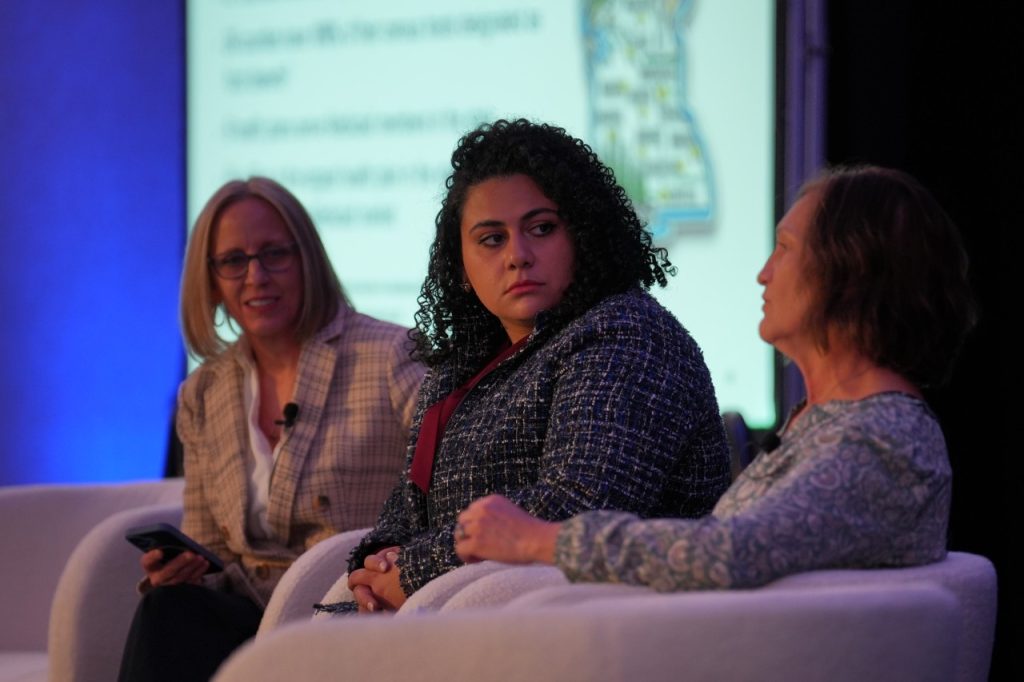
Even basic access improvements follow the same logic. An A/B website test showed members navigating to two different places on a site to find plan details. The fix was not complicated. The information was placed in both locations. Engagement increased.
At the heart of every one of these examples is a shift away from cost reallocation toward true cost reduction and value creation. “We can all make money. We can all take care of people. Let’s focus on cost reduction, not just cost shifting,” Dustin said. That shift matters more than ever as financial pressure on members continues to intensify.
AI and the Future of Compliant, Human-Centered Engagement
Few topics dominated more conversations at the Summit than AI. There is excitement, anxiety, optimism, and skepticism all wrapped into one word. What stood out most to me, however, was not the technology itself. It was the tension between efficiency and humanity.
One of the most grounded use cases discussed was simple and powerful. When a member is on a call, let AI take the notes. That frees up the care manager or service rep to actually listen. Presence matters. So does empathy. Laura Cooley, Editor in Chief at the Journal of Patient Experience, summed it up in two words I cannot stop thinking about. AI should stand for “Authentic Interaction.”
That framing matters. Because one of the biggest risks with AI is the temptation to make it mimic human behavior instead of supporting it. “Be mindful and don’t try to mimic humans,” Abner cautioned. The goal is not to replace relationships. The goal is to protect them.
Trust is also shaped by what members see online. Social media spreads misinformation quickly, often long before plans have a chance to provide accurate guidance. That noise makes it even more important for payers to communicate clearly, consistently, and compassionately.
Abner also challenged leaders to confront something many prefer to avoid. The data feeding AI is already biased. Historical data reflects historical inequities, access issues, and structural gaps. If we do not acknowledge that reality, we risk hardcoding those same failures into our future systems. How do we teach AI to recognize bias? What guardrails need to be in place? How do we align AI governance with the healthcare principle of Do No Harm?
Dustin made one hard boundary clear. “We will not use it to make a clinical decision. That is an easy no.” And that line matters. Because without clear ethical limits, AI can move from support tool to liability very quickly.
Adoption strategy matters just as much as ethics. Members fall into very different engagement categories.
- Self-service members
- Members who need some help
- High-need, low-access members
Testing AI first with self-service populations makes sense. The margin for harm is lowest there. But using AI with vulnerable populations requires far more caution, transparency, and oversight.
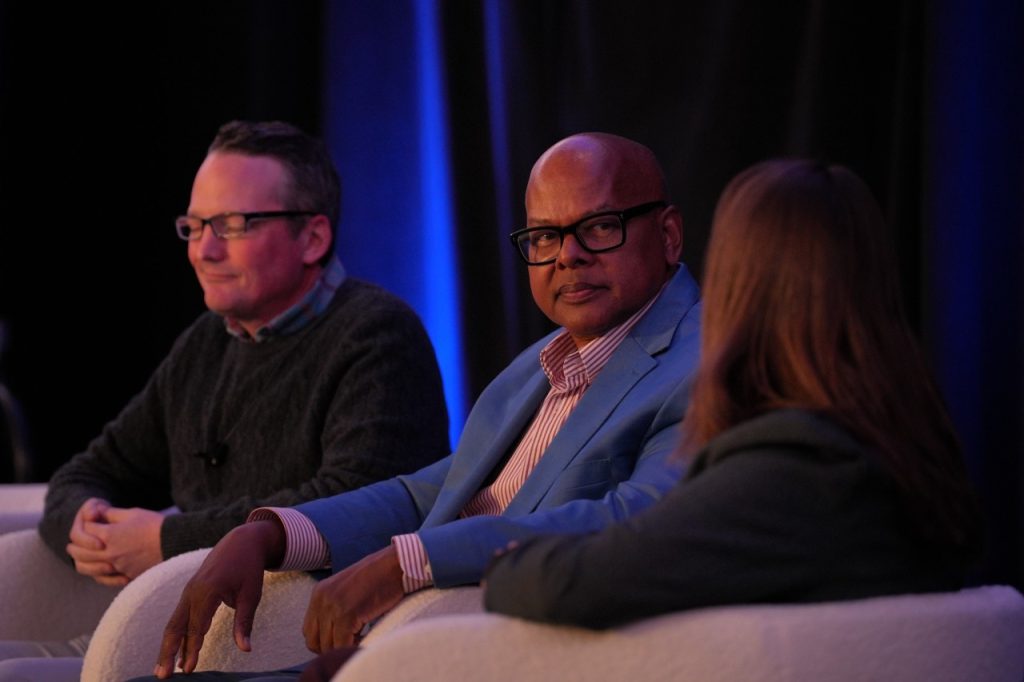
Some called for radical transformation. Erica Olenski captured that tension when she said, “With AI, now is the time to make revolutionary change.” That call is born from deep frustration with how slowly the system has responded to what members actually need.
And yet, Abner’s concern still echoes. If the data we use to train AI is deeply flawed, fragmented, and outdated, we risk accelerating in the wrong direction. There was even disagreement among panelist about whether the data problem is one of true absence or disjointed systems that fail to talk to one another. Either way, the result is the same. We cannot answer fundamental questions:
Where did this member information come from? How out of date is it? What biases and misconceptions does it contain?
If the industry cannot even agree that this is a problem, solving it becomes exponentially harder.
What Members and Patients Are Really Asking For
One of the most meaningful sessions of the Summit centered on something the industry often overcomplicates. What do members and patients want from their health insurance?
Erica and Jasmine Marecle offered perspectives shaped by navigating the system when it mattered most. Erica spoke about psychological trust and how patients and caregivers exist in deeply compromised states. “Patients have no leverage economically or even over their health data,” she said. That imbalance defines the entire healthcare experience.

Historically, the industry has talked around patients. Language, policy, and process are built for providers, payers, and regulators. Patients are often the last voice at the table. Erica challenged that directly. “Make the patient a source of truth. The patient should own their data, like banking.” In banking, consumer data access is assumed. In healthcare, it is still treated as conditional.
Jasmine brought the issue back to something even simpler. “Explain the why,” she said. “I do not have the type of context for how this system is supposed to work. And I am caught in the middle making decisions when I am the least informed in the whole ecosystem.”
Trust does not require perfect systems. It requires transparency. Members do not need every policy detail. They need to understand why things happen and what it means for them.
Medicare, Medicaid, and the Shifting Ground Beneath Government-Sponsored Care
The government-sponsored market outlook for 2026 and 2027 is sobering. Many of the most disruptive impacts are expected to scale fully in 2027, especially as risk pools adjust to eligibility changes and work requirements take effect.
Greg Gierer from Hilltop Health Policy Advisors was direct about the root issue. “Policy issues are not addressing the underlying issues, the pocketbook costs members are feeling.” Affordability remains the number one concern across every government program.
Kimberly Kockler, Senior Vice President of Government Affairs at Independence Blue Cross, added another layer of realism. “You cannot push one area without paying for it in another.” Whether it is benefit expansion, cost control, or access improvements, tradeoffs are unavoidable.
Across government-sponsored coverage, innovation is happening outside traditional models. Programs like diaper support, transportation, food access, and GED assistance reflect a broader understanding that health is shaped beyond clinical care. These investments are not nice-to-haves anymore. They are central to outcomes, especially for vulnerable populations.
Medicaid Work Requirements and the Cost of Uncertainty
Nowhere are the consequences of data gaps, delayed guidance, and system fragmentation more apparent than in Medicaid.
With work requirements expected to take effect in January 2027, the time to act is now. Yet many plans still lack meaningful federal guidance. That creates a dangerous planning environment. Members are exposed to coverage risk while organizations hesitate, waiting for clarity that may not arrive in time.
The first step is straightforward, even if execution is not. Plans must identify which members are at the greatest risk of disenrollment and engage them continuously throughout 2026. Outreach cannot be episodic. It must be ongoing, personalized, and supportive. As Dustin described it, “We have been playing the game and now we have to go to the Super Bowl. With no playoffs in between.”
That pressure is real. If plans wait until 2027 to react, it will be too late for many members.
This is not just a compliance issue. It is a trust issue. Members who lose coverage due to administrative confusion or unclear requirements will not forget that experience. It shapes long-term distrust of institutions, not just plans.
ObamaCare, ACA, Marketplace, Individual: Whatever You Want to Call It
Structurally, the ACA Marketplace continues to stabilize. Enrollment remains historically strong and public awareness of the Marketplace has grown. But politically and economically, the environment remains fragile. Federal budget pressures, the government shutdown, Medicaid redeterminations, and the looming expiration of enhanced premium tax credits are all hitting at once.
For many plans, the challenge is not whether the Marketplace will survive. It is how volatile the next two to three years may be and how to plan through uncertainty without destabilizing members.
Member understanding remains alarmingly low. “Most members have no clue what is going on,” Blair Fjeseth, President and Chief Executive Officer of Mountain Health Coop, shared. “We barely understand what is going on ourselves.” That information gap fuels fear, churn, and distrust.
Member understanding remains one of the most persistent barriers. Even as enrollment grows, confusion runs deep. Members are juggling jobs, family responsibilities, second incomes, and caregiving duties. Insurance literacy is rarely prioritized in daily life until something breaks. When policy changes arrive layered with regulatory complexity, plans are often left trying to translate chaos into clarity for populations that never asked to become policy experts.
Catherine Grason from Oscar highlighted how confusing even pricing has become. “We had to reprice our plans three times in 20 states.” That level of uncertainty undermines long-term planning for both payers and members.

At the same time, the government shutdown has unexpectedly reignited public attention around the ACA. Conversations about the Marketplace are happening at kitchen tables again. “There is something good about that,” said Julie Bogorad, Director of the Office of Public Policy at Independence Blue Cross. “People understand the market and what it stands for.”
State-Based Marketplaces like Pennie are helping stabilize visibility. Transparency around Open Enrollment performance matters. Early data shows Pennie experienced:
- 15% decrease in new enrollees compared to 2025.
- For every 1 new enrollment, 2 enrollees terminated coverage in the first five weeks.
Distrust remains the defining challenge. As Blair said, “So much distrust. So much fighting between payers, providers, and Congress. It leads to member distrust. We are supposed to communicate, but what is there to communicate?”
Julie described the emotional impact on members. “They are used to associating coverage and security with their current plan.” When that security feels threatened, fear rises quickly.
The real fear is what happens in 2027. Rising premiums risk pushing younger and healthier members out of the Marketplace, destabilizing the individual risk pool even further.
Growth is no longer driven solely by competitive pricing or expanded footprints. It is driven by operational resilience. The plans that retain members through uncertainty will be the ones that communicate clearly, bill accurately, and resolve issues quickly.
ICHRA and the Search for Stability
Against that backdrop, the Individual Coverage Health Reimbursement Arrangement (ICHRA) continues to draw interest as a stabilizing force. Employer coverage costs are up roughly 9 percent, and organizations are searching for alternatives that restore choice and predictability.
Independence Blue Cross described being “very hopeful for ICHRA” due to its potential to improve risk pools and expand access to quality options. What makes ICHRA unique is its rare bipartisan alignment around two goals that often conflict: giving consumers choice and bolstering the ACA.
As Julie described it, the ACA is a “beautiful creature that exists.” ICHRA may be one of the most viable paths to strengthening it without dismantling its core structure.
States are being called to step up as well. Georgia Access was cited as a model for building employer-facing ICHRA platforms that simplify adoption and expand participation. The opportunity is real. But so is the risk of underinvestment, uneven employer education, and fragmented implementation.
What we consistently hear from health plans is that ICHRA is no longer perceived as a niche offering. It is becoming a core growth strategy. But the plans that win here will not be the ones that simply launch fastest. They will be the ones that operationalize choice, affordability, and engagement cleanly from day one.
If there was one thread that connected every major conversation at the Summit, it was this: technology, policy, and innovation only work when they strengthen trust instead of eroding it.
- Member engagement fails when it feels extractive instead of supportive.
- AI fails when it prioritizes speed over ethics.
- Government programs fail when rules change faster than guidance arrives.
- Marketplaces falter when members are confused, priced out, or left behind.
None of these challenges are new. But the stakes are higher now. Affordability pressure is rising. Political volatility is increasing. Data is more powerful and more dangerous than ever before.
The work ahead is not about building more tools. It is about using the tools we already have with more intention. Listening before automating. Explaining before enforcing. Supporting before surveying.
Healthcare does not lack innovation. It lacks alignment.
The next era of growth, whether in Medicaid, Medicare, the Individual Marketplace, or ICHRA, will not be defined by who moves fastest. It will be defined by who earns and keeps member trust at scale.
You do not work in this industry because you want something boring and easy,” shared Ellen Sexton Executive Vice President and Chief Growth Officer at Blue Shield of California.
So, let’s get to work.