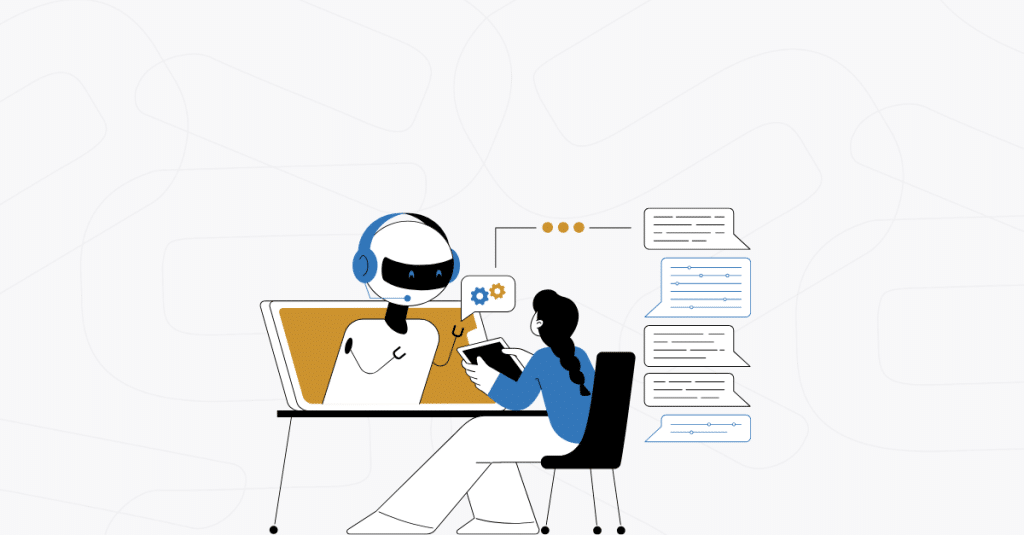
Artificial Intelligence (AI) is revolutionizing operations by enhancing member experiences and reducing employee workloads. Effective AI complements human efforts by automating repetitive tasks, improving decision-making, and fostering a healthier work-life balance. But employees have valid concerns that health plans need to address before AI can reach its full potential to transform healthcare.
Regulation around the use of AI in healthcare is constantly evolving, and health plans must exercise caution when adopting AI applications to ensure they prioritize both employee well-being and member satisfaction. And employees fear key parts of their roles could be replaced by AI. At the same time, health plans cannot afford to delay AI adoption. Doing so risks falling behind in a rapidly advancing industry.
Softheon recommends health plans focus on leveraging AI to enhance employees’ ability to increase member satisfaction and streamline operational efficiency. And, as a result, empower employees to dedicate their energy to more meaningful and impactful work.
The Role of AI in Health Plan Operations
Streamlining Administrative Processes
AI has revolutionized repetitive administrative tasks, offering automation for enrollment processing, eligibility verification, claims management, and billing reconciliation. By reducing manual work, AI minimizes human errors and accelerates turnaround times. This creates a seamless experience for members while allowing employees to focus on higher-value activities, such as personalized member support and process oversight.
Example: AI-powered tools can automate data normalization, ensuring that health plans can efficiently standardize data formats and improve accuracy when communicating with the Centers for Medicare & Medicaid Services (CMS). This enables quicker approvals, reduces compliance risks, and supports seamless operations.
Enhancing Member Experiences
AI works best when tailored to meet human needs. Health insurance shoppers and members are looking for guidance, not impersonal automation. They require a blend of technological efficiency and human empathy to navigate their options and secure the care they need. Through real-time insights, predictive analytics, and tailored interactions, AI enables health plans to:
- Personalize plan recommendations based on a member’s health profile and preferences.
- Provide proactive reminders about preventive care, appointments, or payment deadlines.
- Deliver consistent, high-quality support by equipping representatives with instant access to the right information.
Example: AI-powered chatbots can serve as an initial point of contact for common inquiries while seamlessly handing off complex issues to live agents. These agents, equipped with AI-driven dashboards, can provide more personalized support. For instance, during open enrollment, the AI can guide members through plan comparisons based on their unique needs, ensuring they select the best option for them.
Empowering the Workforce
Rather than replacing employees, AI serves as a powerful partner that enhances their capabilities and reduces burnout. By automating repetitive and time-consuming tasks, AI allows employees to focus on work that requires critical thinking, problem-solving, and personal interaction with members. Invest in AI that allows employees to:
- Dedicate efforts to complex issues or personal member care by automating routine tasks like scheduling and data entry.
- Reduce the burden of high-volume, repetitive tasks, leading to improved job satisfaction.
- Gain actionable insights from AI-driven dashboards and analytics to guide decisions and strategies effectively.
Example: Sales managers and brokers can use AI to prioritize their outreach based on predictive analytics, such as identifying members at higher risk of churn. With this insights, they can focus on better understanding why a member might be at risk of leaving the plan, and what they can do to re-earn their trust in the health plan.
Addressing Concerns About AI Adoption
Job Security
One of the most frequent concerns about AI adoption is its potential to replace jobs. In health insurance, this fear grows as AI becomes more capable of automating tasks traditionally handled by humans. However, the focus should not be on replacement, but rather on the opportunity for AI to complement the workforce and create new jobs.
- Reskilling and Upskilling: Health plans can lead the way by offering reskilling programs designed to help employees adapt to the new AI-driven landscape. By providing ongoing education and training opportunities, workers can acquire the skills needed to thrive in emerging roles, such as data analysts, AI trainers, and medical coding specialists. This approach ensures that the workforce evolves alongside technology rather than being displaced by it.
- Transparency with Employees: Health plans should be proactive in explaining how AI will be integrated into daily operations and the potential impact on various roles. This includes providing clear timelines, outlining the scope of AI’s capabilities, and detailing how employees’ tasks may change. Transparency about the vision behind AI adoption helps employees understand the positive potential of technology and alleviates fears. Seek feedback through surveys, focus groups, and open forums to gauge employee concerns and preferences.
- Job Creation: While some roles may be automated, AI also opens up new job categories, especially in areas that require human expertise, empathy, and ethical oversight. These include AI system auditors, ethicists, and specialists in AI-human collaboration. Health plans should position themselves as leaders in workforce development by creating opportunities for employees to transition into these future-oriented roles.
Data Privacy and Security
AI’s reliance on vast amounts of data, especially sensitive health information, raises significant concerns around data privacy and security. Health plans must prioritize robust data governance frameworks to ensure compliance with regulations such as HIPAA (Health Insurance Portability and Accountability Act) and other privacy standards. This will help maintain member trust and ensure AI systems are used responsibly.
- Robust Data Governance: Health plans should implement comprehensive data governance policies to ensure data is securely managed and that AI systems are transparent about how data is collected, processed, and used. By adopting best practices for data privacy, such as encryption and de-identification, health plans can significantly reduce the risk of breaches.
- AI Regulation and Federal Support: As the AI landscape continues to evolve, there is increasing momentum for federal support in AI infrastructure. For instance, the recent announcement of the Stargate venture, backed by President Donald Trump and leading AI and tech industry figures, signals a commitment to advancing AI in the U.S. While still in its early stages, such initiatives will help fund and drive AI innovations that support secure, transparent, and responsible data practices.
- Collaboration with Technology Partners: Health plans can also partner with trusted AI vendors and technology providers who adhere to stringent privacy protocols and are aligned with healthcare regulations. This collaboration can help mitigate the risk of data breaches and ensure that AI tools are used in a way that is both compliant and ethical.
Ethical Use of AI
The ethical use of AI in healthcare has become a pressing issue, especially as algorithms are increasingly used to make important decisions regarding insurance coverage, claims approval, and care access. The use of AI to make coverage decisions has been a subject of concern, with national health plans facing class-action lawsuits alleging that their algorithms contributed to unfair denials of care.
- Addressing Algorithmic Bias: Garbage in, garbage out. AI systems are only as unbiased as the data they are trained on. If these systems are trained on flawed or incomplete data, they risk perpetuating existing biases that could disadvantage certain populations. To ensure fairness, health plans must prioritize diversity in data sets and implement rigorous testing to identify and mitigate potential biases.
- Transparency and Accountability: AI decisions should be explainable and transparent, especially when they affect patient care or insurance outcomes. Health plans must develop clear guidelines for how AI is used in decision-making processes and ensure that these systems are subject to regular audits.
- Collaboration for Systemic Reform: While AI can be a powerful tool for improving efficiency and fairness, deeper systemic reforms in healthcare are necessary to address the factors that lead to unequal access, such as social determinants of health. Health plans should work alongside policymakers, technology companies, and healthcare providers to push for comprehensive reforms that focus on improving the overall healthcare system.
Looking Ahead: AI in Health Plans by 2025
As we look to the future, 2025 promises to be a transformative year for AI adoption in health plans. More organizations will embrace AI-driven processes to streamline backend operations, not to replace human interactions but to make challenging and mundane tasks easier for employees.
Tom Cohen, EVP of Healthcare Solutions at Softheon, recently discussed the growing role of AI in an interview, saying, “We’ve been rolling out generative AI capabilities to bring efficiency to our internal teams by synthesizing all our regulatory and solution-based data. This initiative not only improves our internal operations but also offers our partnered health plans greater accessibility to Softheon’s process documentation through a chatbot interface. Additionally, we’ve developed a Medicare Advantage solution that aligns with our ACA offering, helping health plans manage both under-65 and over-65 lines of business more effectively, creating a unified approach that simplifies operations.”
As health plans look to the future, following the lead of forward-thinkers can help create a healthcare ecosystem where AI not only empowers employees but also provides better, more personalized care for members. This balance between innovation and human empathy will be essential in shaping a more efficient, effective, and member-centric healthcare system.
To explore how your health plan can successfully harness the power of AI to enhance experiences for both employees and members, reach out to Softheon.